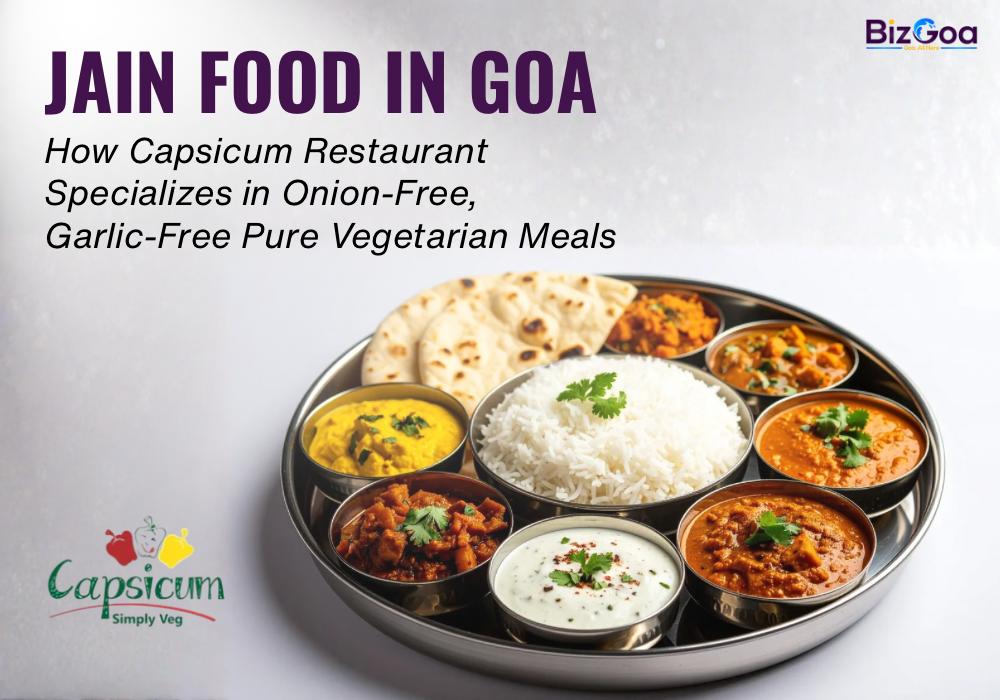
If you follow Jain dietary practices, finding the right restaurant in Goa can often feel frustrating. Goa is celebrated for its beaches, nightlife, and seafood-rich cuisine, but for Jains, the options are limited and often unreliable. Jain food isn’t just “vegetarian food without onion and garlic”; it is deeply rooted in the principle of ahimsa (non-violence) and includes strict guidelines such as avoiding root vegetables, eggs, and certain fungi. These requirements make dining out especially challenging, particularly outside cities with strong Jain communities.
In a tourism-driven destination like Goa, most restaurants focus on mainstream palates, leaving very little infrastructure for authentic Jain food. Many places may claim to serve Jain meals, but cross-contamination, lack of ingredient knowledge, and inconsistent preparation make it hard to trust them fully. At the same time, a growing wellness-conscious audience, yoga practitioners, Ayurveda followers, and clean-eating enthusiasts, is increasingly adopting Jain-style diets for their digestive and ethical benefits.
This is where Capsicum Restaurant stands apart. Rather than treating Jain food as an afterthought, Capsicum has positioned itself as a specialist, offering carefully prepared, onion-free, garlic-free pure vegetarian meals with consistency and respect for Jain principles. But what exactly is Jain food, and why is it so different from regular vegetarian cuisine?
If you’re looking for reliable Jain dining in Goa or want to check availability before visiting, you can speak directly with the team at 8788947831 for experience.
Understanding Jain Food & Dietary Principles
The Philosophy Behind Jain Dietary Restrictions
Jain food is deeply connected to the spiritual and ethical foundation of Jainism, one of the world’s most ancient Indian religions. At its core lies the principle of ahimsa, or non-violence, not just toward humans and animals, but toward all living beings, including microscopic life forms. This belief shapes every aspect of a Jain’s lifestyle, and food is one of the most important expressions of it.
In practice, this philosophy goes beyond simple vegetarianism. Jain dietary rules are designed to minimise harm, reduce attachment, and promote the purity of body and mind. What one eats is believed to directly influence thoughts, emotions, and spiritual progress. That’s why Jain food is not treated as a casual preference or a short-term diet trend; it is a lifelong spiritual discipline.
Interestingly, this ethical clarity is also what attracts many modern wellness seekers today. As people become more conscious about sustainability, mindful eating, and compassionate living, Jain food naturally aligns with these values. It offers a way of eating that is intentional, restrained, and deeply respectful of life, making it as relevant today as it was centuries ago.
What Jain Food Avoids & Why
No Onion & Garlic
Onion and garlic are strictly avoided in Jain cuisine. According to Jain belief, these underground bulbs contain multiple tiny life forms, and uprooting them causes significant harm. Beyond the spiritual reasoning, Ayurveda also classifies onion and garlic as rajasic and tamasic foods, ingredients that can increase restlessness, heat the body, and disturb mental balance. Many people also report digestive discomfort, inflammation, or bloating from excessive consumption of alliums. For meditation and spiritual practices, a calm and light digestive system is considered essential, which is why onion- and garlic-free food is preferred.
No Root Vegetables
Vegetables like potatoes, carrots, radishes, beets, and turnips are avoided because harvesting them kills the entire plant, unlike leafy vegetables, where only parts are removed. This reflects a strong environmental and sustainability principle, taking only what is needed without destroying the source. From a modern health perspective, Jain diets often lean toward an alkaline food balance, which aligns with current clean-eating and gut-health trends.
No Mushrooms
Mushrooms are classified as fungi, which occupy a unique biological category, neither plant nor animal. In Jain philosophy, they are considered spiritually unsuitable due to their growth environment and high concentration of microorganisms. As a result, mushrooms are excluded entirely from Jain cooking.
No Eggs
Eggs are avoided because they represent potential life. Even unfertilized eggs are excluded to maintain consistency with vegetarian ethics. Instead, Jain cuisine focuses on plant-based protein sources such as lentils, legumes, dairy, and nuts.
No Food After Sunset
Many Jains avoid eating after sunset, as nighttime cooking and eating may inadvertently harm insects drawn to light. This practice also promotes discipline, energy conservation, and mindful consumption. Interestingly, it closely mirrors modern concepts like intermittent fasting, which are praised for improving digestion and metabolic health.
Why Jain Food Isn’t Bland?
A common misconception is that Jain food lacks flavour because it excludes onion and garlic. In reality, Jain cuisine is a masterclass in spice balance and technique. Ingredients like turmeric, cumin, coriander, mustard seeds, and especially asafoetida (hing) create layers of aroma and depth that compensate beautifully for the absence of alliums.
Traditional tempering methods (tadka), slow cooking, and careful spice roasting bring richness and complexity to dishes. Ingredients such as coconut, cashew paste, sesame seeds, ghee, and dairy add body and indulgence without violating Jain principles.
The proof lies in cities like Ahmedabad and Mumbai, where Jain restaurants consistently rank among the highest-rated vegetarian establishments. Flavour, texture, and satisfaction are not compromised, only refined. Jain food, when prepared authentically, is anything but boring.
Capsicum’s Jain Food Expertise
Dedicated Jain Kitchen Protocols
What truly sets Capsicum apart in Goa’s dining landscape is its serious, non-negotiable commitment to Jain kitchen protocols. Jain food cannot be treated as a last-minute customisation; it requires structural planning, discipline, and respect for the philosophy behind it. At Capsicum, this begins right at the kitchen level. Capsicum follows a 100% meat-free and egg-free kitchen policy, with strict Jain-compliant preparation methods and dedicated protocols to prevent any cross-contamination with restricted ingredients.

The restaurant follows separate preparation practices to prevent any risk of cross-contamination with onion, garlic, or restricted ingredients. From chopping boards to cooking stations, Jain food is handled with intentional segregation. Utensils used for Jain cooking are clearly marked and reserved exclusively for onion-free, garlic-free preparations, ensuring purity at every stage.
Equally important is staff training. The kitchen and service teams are educated on Jain dietary requirements, not just what to avoid, but why it matters. This understanding allows the staff to answer questions confidently, accommodate special requests accurately, and maintain consistency even during peak hours.
Capsicum also maintains internal quality checks and follows standard food safety and hygiene protocols aligned with modern hospitality standards. For Jain diners, this combination of spiritual sensitivity and professional food safety creates something rare in Goa: peace of mind. Guests don’t have to repeatedly explain their requirements or worry about mistakes; the systems are already in place.
A Taste of Ahmedabad in South Goa: Why Capsicum Is the Ultimate Destination for Authentic Amdavadi Snacks
For many Jain and Gujarati travellers, the hardest part of vacationing in Goa isn’t missing home; it’s missing authentic food. Finding real Amdavadi snacks like fafda-jalebi or perfectly rolled khandvi outside Gujarat can feel nearly impossible, especially when most tourist spots offer generic “veg options” at resort-level prices.

Capsicum bridges this gap beautifully by bringing Ahmedabad’s culinary heritage straight to South Goa. The head chef’s training and hands-on experience in Ahmedabad play a crucial role here. Backed by generations of Jain and Gujarati recipe knowledge, the kitchen doesn’t just recreate dishes; it preserves their soul.
This is not casual vegetarian cooking. Every snack and meal reflects a deep understanding of regional technique, spice balance, and Jain compliance. Regular customers trust Capsicum because of this consistency; the taste doesn’t change, the rules aren’t bent, and authenticity is never compromised. The staff can also explain dishes clearly, making the experience welcoming even for first-time diners exploring Gujarati cuisine.
Signature offerings like fafda, jalebi, thepla, and khandvi are prepared fresh and served at best local prices, especially when compared to the inflated rates often found at beachside resorts. For anyone searching for Amdavadi Snacks in Goa, this is a rare find.
As a Pure Veg Restaurant in Cavelossim, Capsicum has become a go-to for travellers craving an authentic Gujarati taste without overpaying. It’s not just about eating vegetarian food, it’s about experiencing a regional Jain tradition, lovingly recreated in Goa.
Menu Highlights: Jain Specialities
Appetizers
-
Dhokla – Soft, steamed, and lightly tangy; the kind that feels satisfying without feeling heavy.
-
Khandvi – Thin, delicate rolls with a melt-in-the-mouth texture and gentle spice balance.
-
Fafda – Crisp, savoury, and comforting; a true Gujarati classic that works any time of day.
-
Khichdi – Simple, warm, and nourishing; perfect when you want something light and familiar.
-
Papad – Thin, crunchy, and freshly roasted, adding that extra bite to the meal.
Main Courses
Dal Varieties
-
Red Lentil Dal – Mild, smooth, and easy on the stomach.
-
Chickpea Dal – Hearty and filling with a wholesome texture.
-
Black-Eyed Pea Dal – Slightly nutty, rich in protein, and deeply comforting.
-
Dal Makhani (Jain-style) – Slow-cooked, creamy, and indulgent without onion or garlic.
Vegetable Sabzi
-
Bottle Gourd Sabzi – Light, subtle, and gently spiced.
-
Okra (Bhindi) Preparation – Crisp, well-cooked, and never slimy.
-
Spinach-Based Sabzi – Fresh, earthy, and nutrient-rich.
-
Tomato-Based Seasonal Vegetables – Balanced flavours that change with availability.
Paneer Preparations
-
Paneer Makhani – Creamy, rich, and comforting without overpowering spices.
-
Paneer 65 – Crisp on the outside, soft inside, and perfectly spiced.
-
Paneer Bhurji – Lightly scrambled, flavorful, and ideal for any meal.
Biryani & Rice
-
Pure Veg Jain Biryani – Fragrant, layered, and full of flavour without onion or garlic.
-
Steamed Basmati Rice – Clean, aromatic, and the perfect base for dals and sabzi.
Breads
-
Pure Ghee Rotis – Soft, warm, and freshly made.
-
Parathas – Slightly crisp, comforting, and filling.
-
Tandoori Rotis – Lightly charred with a smoky finish.
-
Puri – Golden, fluffy, and indulgent in the best way.
Desserts
-
Kheer – Slow-cooked rice pudding with condensed milk, comforting and gently sweet.
-
Halwa – Soft, warm, and satisfying, made with semolina or Jain-approved vegetables.
-
Barfi – Rich, milk-based fudge with a clean, nostalgic taste.
-
Laddu – Classic gram flour sweets, wholesome and celebratory.
All desserts are prepared using strictly Jain-approved ingredients.
Beverages
-
Lassi – Cooling, creamy, and refreshing, perfect for Goa’s weather.
-
Badam Milk – Lightly sweet, nourishing, and comforting.
-
Herbal Teas – Gentle blends like chamomile or ginger (without restricted ingredients).
-
Fresh Fruit Juices – Simple, fresh, and naturally energising.
-
Chai – Classic comfort tea, prepared without spices that conflict with Jain rules.
Customer Testimonials (Jain Community)
-
Local Jain families who return regularly, treating Capsicum like a trusted home kitchen.
-
Jain tourists who mention trust and reliability in their reviews.
-
A strong sense of relief, no second-guessing ingredients while dining out.
-
Taste and quality are often compared to home-cooked Jain meals.
-
Smooth handling of family gatherings and special occasions without compromising dietary values.
Jain Food Beyond Religion: Health & Wellness Trends
Modern Wellness Movement Adoption
Jain food is no longer viewed only through a religious lens. In recent years, it has found a natural place within the global health and wellness movement. As more people shift toward clean eating, ingredient transparency, and mindful consumption, Jain dietary practices feel surprisingly modern.
One of the biggest reasons is the elimination of heavily stimulating foods like onions and garlic, which many wellness followers now associate with inflammation, bloating, and digestive discomfort. Ayurveda, which is steadily gaining mainstream acceptance, has long spoken about how certain foods affect mental clarity and bodily balance, principles that Jain food has followed for centuries.
The diet also fits neatly into the growing preference for plant-based proteins, relying on lentils, legumes, dairy, and whole grains instead of processed meat substitutes. Add to that a strong focus on digestion, light cooking methods, and portion discipline, and it becomes clear why Jain food appeals far beyond the Jain community today.
Health Benefits of the Jain Diet
Digestive Health
Jain food is known for being gentle on the stomach. The absence of onion and garlic often leads to reduced gas formation and less acidity for sensitive eaters. Most dishes are cooked using light techniques, steaming, slow cooking, or minimal oil, which makes digestion easier.
With a high intake of lentils, whole grains, and vegetables, the diet naturally supports fiber intake and gut health. Many people with IBS or sensitive digestion find Jain-style meals more comfortable and predictable.
Anti-Inflammatory Profile
Onion and garlic are known to trigger histamine responses in some individuals, contributing to inflammation, bloating, or skin flare-ups. Jain cuisine replaces them with spices like turmeric, cumin, and asafoetida, all of which are known for their anti-inflammatory and digestive properties. Many diners report feeling lighter, less bloated, and more energetic after switching to Jain-style meals, even if only temporarily.
Nutrient Density
Jain diets emphasise whole foods over processed ingredients. Staples like brown rice, millets, lentils, and seasonal vegetables ensure steady nutrient intake. The variety of legumes consumed helps provide a balanced amino acid profile, while ghee supports the absorption of fat-soluble vitamins. Seasonal cooking further ensures food is consumed at peak nutritional value.
Ethical Eating
Beyond physical health, Jain food supports mental and emotional well-being. The focus on non-violence, sustainability, and mindful consumption creates a sense of peace and alignment with personal values. For many, this ethical clarity is just as nourishing as the food itself.
Who’s Choosing Jain Dining Today?
-
Yoga and meditation practitioners seeking mental clarity and light meals
-
Ayurveda patients and practitioners following sattvic diets
-
Wellness retreat guests staying in Goa
-
Eco-conscious travellers prioritising sustainable food choices
-
Health-focused families looking for clean, trustworthy meals
-
Athletes want plant-based, low-inflammation diets
-
Postoperative patients or the elderly need easily digestible food
Jain food has quietly evolved from a community-specific practice into a holistic lifestyle choice, embraced by anyone who values health, balance, and mindful eating
Hosting Jain Events & Celebrations at Capsicum
Family Gatherings & Celebrations
At Capsicum Restaurant, Jain events are planned with intention, care, and complete respect for dietary discipline. Every celebration, small or large, is handled with an understanding that Jain food is not negotiable; it’s foundational.
From Jain wedding functions to intimate family dinners, menus are fully customizable and strictly onion-free, garlic-free, and Jain-compliant. Birthday celebrations can include Jain-friendly cakes and traditional sweets, while anniversary dinners are set in a calm, pure-veg environment that feels personal and unhurried. Capsicum also comfortably accommodates family reunions, offering flexible seating and menus for larger groups.
Religious and cultural occasions such as Diwali, Mahavir Jayanti, and other Jain milestones are handled with sensitivity and familiarity. Families appreciate not having to explain their requirements repeatedly; everything is already understood and respected.
Pilgrimage Groups & Spiritual Travel
Capsicum has become a reliable dining choice for Jain and wellness-focused travellers visiting Goa for spiritual purposes. Many yoga retreat groups and meditation participants prefer Jain food for its light, sattvic nature, and Capsicum supports them with consistent, thoughtfully planned meals.
The restaurant regularly caters to pilgrim groups, temple visitors, and spiritual tour groups, offering pre-arranged menus and timely service that fits structured schedules. For longer stays, wellness retreats can opt for exclusive Jain menus designed for multiple days, ensuring variety without compromising dietary rules. The focus remains on simple, nourishing food that supports clarity, discipline, and ease of digestion.
Corporate Catering for Jain-Community Companies
Capsicum also works closely with businesses that prioritise inclusive and respectful food choices. For Jain-owned companies or teams with diverse dietary needs, the restaurant offers dependable corporate catering solutions.
These include team lunches, recurring meal services, and event catering that align with Jain principles while still appealing to a broader vegetarian audience. Many organisations appreciate Capsicum’s alignment with vendor diversity and CSR initiatives, where religious and cultural respect matters. Long-term partnerships are supported through consistent quality, clear coordination, and volume-based pricing for regular orders.
Looking to host a pure veg event or explore authentic Jain dining? Learn how we can customise meals for you by contacting 8788947831
Wedding Catering Specialisation
Jain weddings require precision, tradition, and absolute dietary compliance, and this is where Capsicum’s experience truly shows. The restaurant offers complete Jain wedding menus, thoughtfully planned for different ceremonies and family customs.
From pre-wedding events like mehendi and sangeet to grand reception dinners with multi-course Jain meals, every detail is managed with professionalism. Menus can be customised to reflect regional preferences and family traditions, while trained service staff ensure smooth execution throughout the event. Elegant, wedding-appropriate presentation adds a refined touch without straying from simplicity and purity.
Conclusion
Finding authentic Jain food in Goa doesn’t have to be a compromise. While the state’s dining scene is largely shaped by tourism and mainstream preferences, places that truly understand Jain dietary principles are rare. Capsicum fills this gap by treating Jain food not as a special request, but as a core expertise, rooted in tradition, prepared with discipline, and served with consistency.
From strict onion-free and garlic-free cooking practices to authentic Amdavadi flavours, thoughtfully curated menus, and event-ready catering, Capsicum offers something Jain diners value most: trust. Whether you are a Jain family travelling to Goa, a wellness-focused diner seeking clean food, or someone planning a Jain celebration, the experience remains dependable and worry-free.
Want to have genuine Jain food in Goa? Contact us to book your table or arrange a customised Jain food experience.
Call/WhatsApp: 8788947831
Visit Us: Shop 37, Upper Ground Floor, Comba, Madgaon, Goa - 403601
Locate Us: Find our location easily on Google Maps.
Order your Jain food online through Swiggy/Zomato, or make a booking for 2 to 50 people and enjoy your dining experience with complete peace of mind.